Contributor: Doug Hubnik, CxA
The Definition of an Energy Model
An energy model is a computer-based simulation used to evaluate how a building is expected to perform from an energy and cost perspective. Software packages such as Trane TRACE, eQUEST, and EnergyPlus incorporate inputs like building geometry, envelope characteristics, HVAC systems, lighting, schedules, utility rates, and local weather data.
The results provide an estimate of the building’s energy consumption and associated operating costs. These estimates can be used to demonstrate compliance with energy codes, optimize building system performance, and support the pursuit of building certifications.
Certifications & Compliance
Typical programs for energy code compliance and building certification include:
- Energy Code Compliance (IECC / ASHRAE 90.1)
- LEED (Leadership in Energy and Environmental Design)
- AEGB (Austin Energy Green Building)
- ENERGY STAR for Buildings
- WELL Certification Green Globes
- NGBS (National Green Building Standard)
While each program applies different evaluation criteria, energy modeling generally uses similar methods to inform design decisions, demonstrate compliance, and guide certification strategies. Check out how adding Commissioning to you project can help you achieve these certifications: Commissioning’s Role in Sustainability Certifications.
Key Metrics That Matter Most
While energy models can produce a large amount of data, a few key outputs are most useful for project teams:
- Energy Use Intensity (EUI) — Total annual energy use per square foot; a common benchmark for comparing building performance.
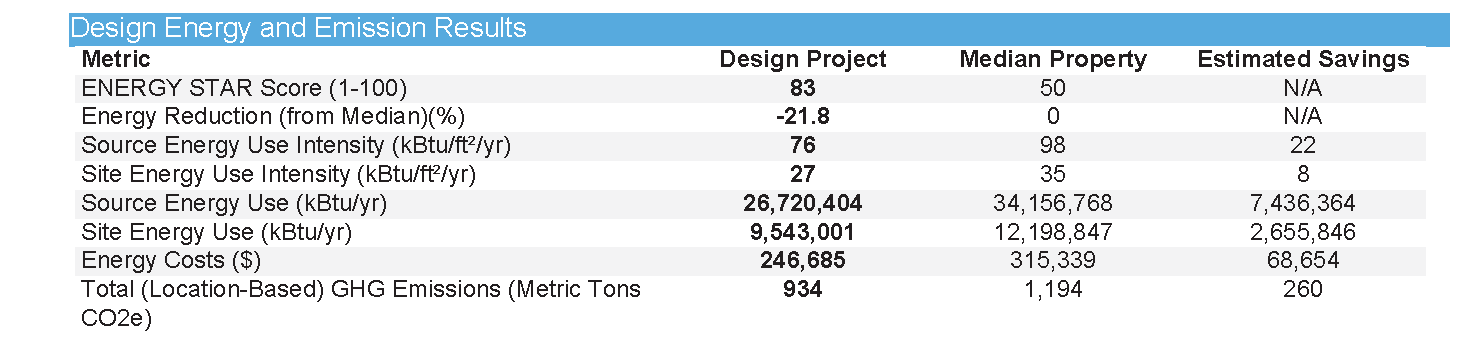
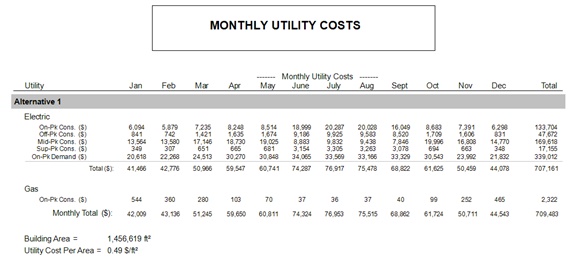
- Annual Energy Cost — Estimated yearly utility cost based on modeled energy consumption and assumed utility rates.
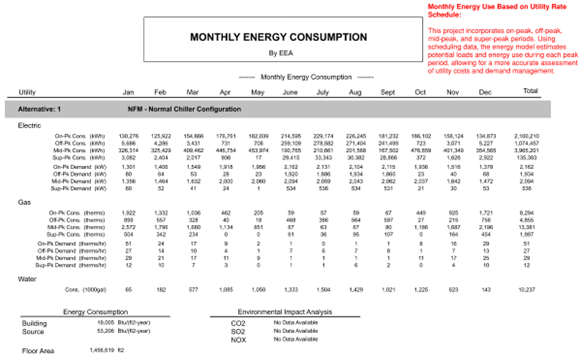
- End-Use Breakdown — Distribution of energy use by system (heating, cooling, lighting, plug loads, etc.), helping identify major drivers of consumption.
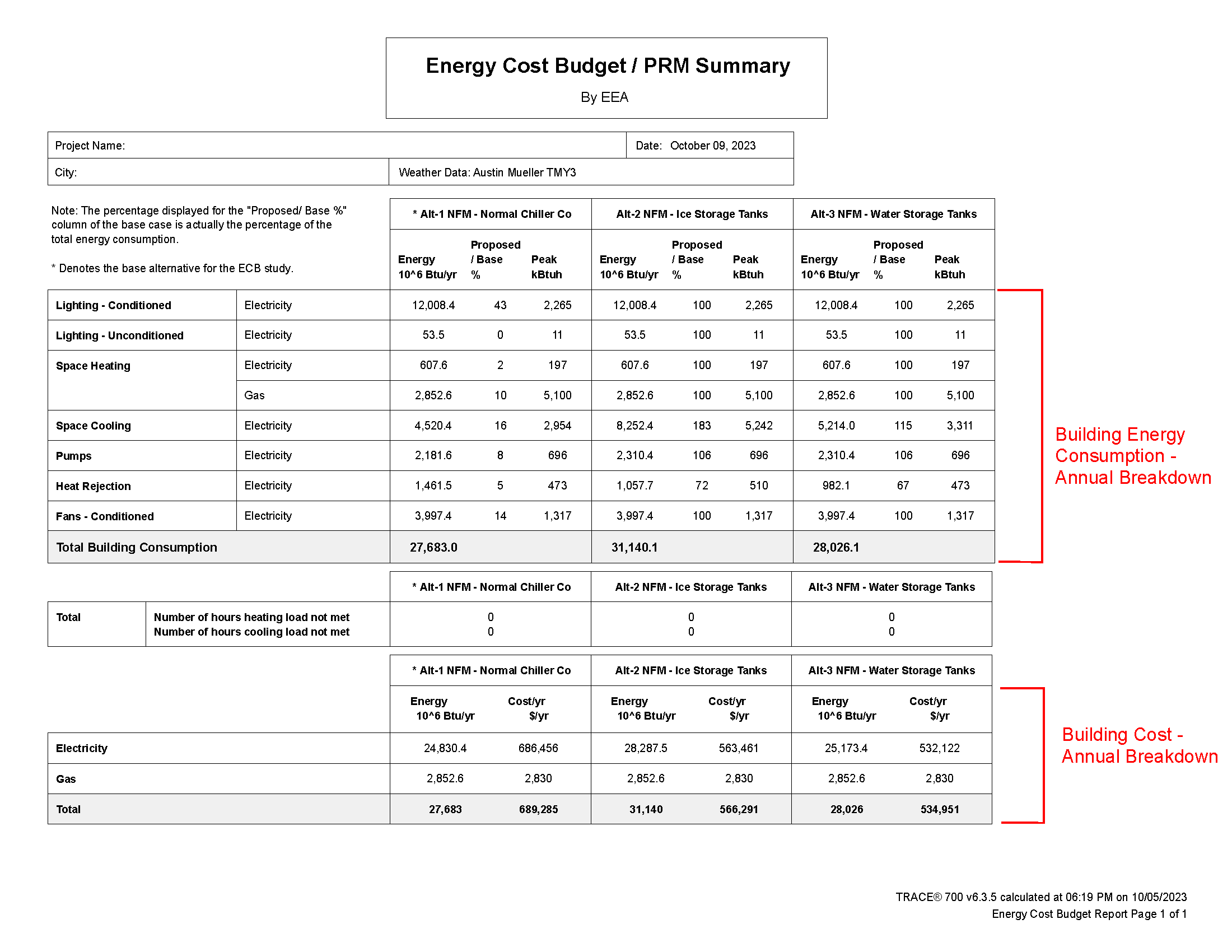
Building Energy Consumption —
Annual Breakdown
This section breaks down total annual energy consumption by end use — lighting, space heating, cooling, pumps, fans, and heat rejection — across all system alternatives being evaluated.
Building Cost — Annual Breakdown
This section shows the annual electricity and gas costs for each system alternative, making it easy to compare operating cost alongside raw energy figures when making system selection decisions.
Figure 4: Energy Cost Budget / PRM Summary comparing three HVAC configurations.
- Load Summaries (Heating & Cooling) — Maximum demand on the building systems, which directly impacts equipment sizing and infrastructure.
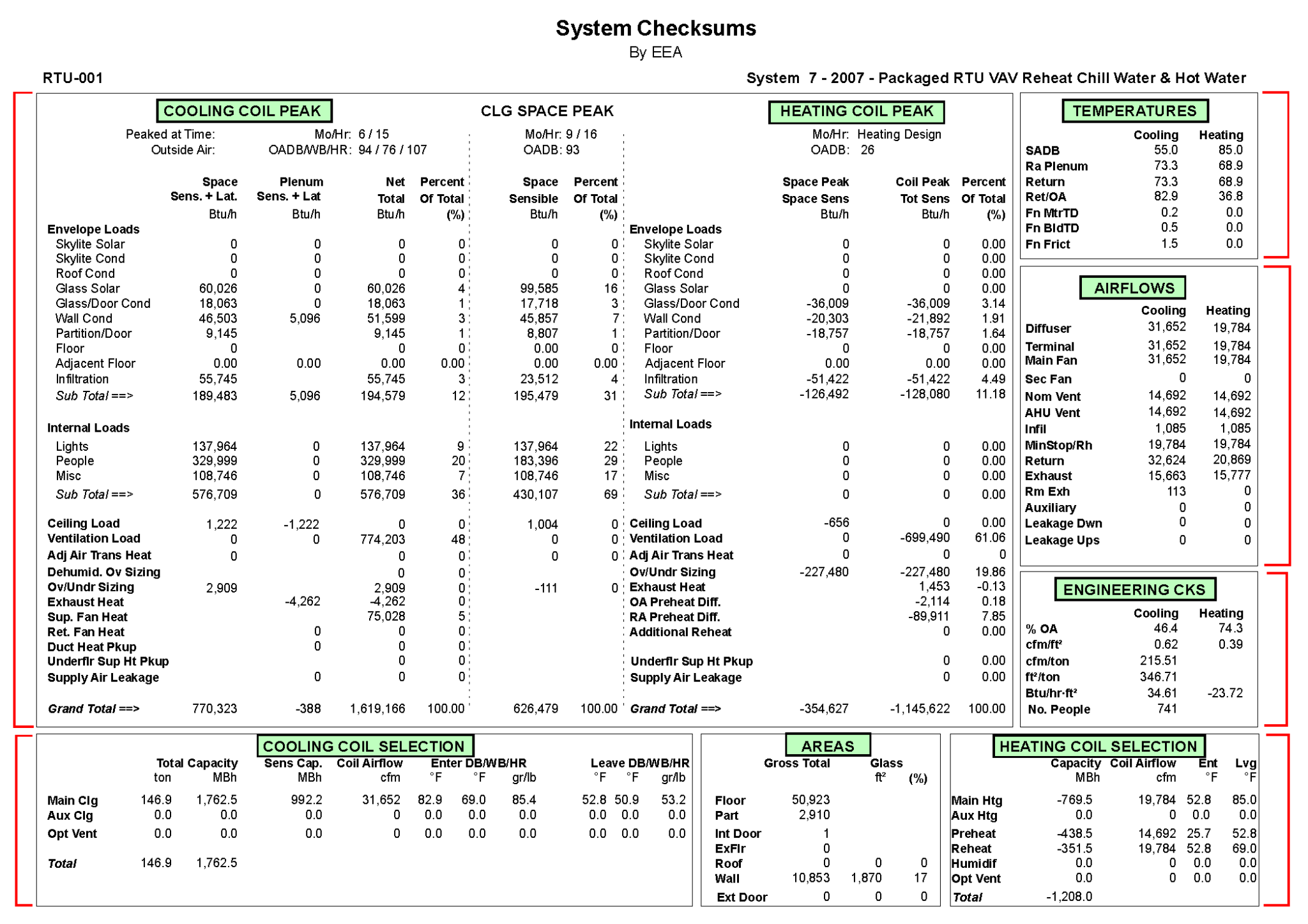
Cooling Coil Peak
Breakdown and sum of the different loads a system or space is expected to experience, based on all inputs, schedules, and weather data.
Temperature
Expected air temperatures at the different locations throughout the system — supply, return, outdoor air, and mixed air conditions.
Airflow
Required airflows needed to maintain design requirements. Key focus areas:
- Diffuser — conditioned supply air delivered to the space
- Ventilation Airflow Rate — outdoor air and ventilation standards
- Exhaust Rate — air removed to maintain pressurization
Engineering Checks
A high-level "sanity check" to review overall system parameters against typical industry guidelines and rules of thumb. Each building will perform differently based on occupancy, layout, and operational conditions.
Cooling Coil Section
Cooling capacity and airflow required to condition the space to the desired setpoints, accounting for all input parameters, ventilation requirements, and local weather conditions.
Heating Coil Section
Heating capacity and airflow required to condition the space to desired setpoints, taking into account all input parameters, ventilation requirements, and local weather conditions.
Figure 5: System Checksums report for RTU-001 — cooling coil peak, heating coil peak, airflows, temperatures, and engineering checks.
What Architects Should Look For
Energy modeling helps architects understand how design decisions impact performance, including:
- Building orientation and massing
- Envelope type, insulation, and air tightness
- Glazing percentage and performance
- Shading strategies (overhangs, fins, etc.)
- Lighting design and daylighting strategies
- Mechanical system selection
Early-stage modeling can highlight high-impact design moves before they become costly to change.
What Owners Should Look For
From an ownership perspective, energy modeling provides insight into:
- Long-term operating costs
- System efficiency and performance
- Return on investment for design decisions
- Opportunities for energy savings and incentives
These items help owners make informed decisions that balance first cost vs. lifecycle cost.
How Energy Modeling Supports Design Decisions
Early Design (Concept / Schematic Design)
At this stage, the model is typically a "simple box model" used to evaluate high-level design decisions — building orientation, massing, glazing percentages, and envelope performance.
Design Development
As the design progresses, the model becomes more detailed and is used to compare system options and refine decisions — including HVAC system types, glazing performance, shading strategies, and lighting power densities.
Construction Documents / Code Compliance
At this stage, the energy model is finalized to reflect the design documents and is used for compliance with applicable energy codes, such as ASHRAE 90.1 or local energy codes, supporting permitting and documentation for high-performance building certification programs.
Common Misinterpretations
Energy models are often misunderstood. Here are the most common misconceptions
Myth
"The model will match actual utility bills."
Energy models are designed to estimate performance under standardized assumptions. Actual utility usage will vary based on occupant behavior, weather conditions, and building operations.
Myth
"Lower EUI always means a better design."
EUI is a useful benchmark; however, a lower EUI does not always equate to a better overall design. Factors such as occupant comfort, system reliability, and first cost should also be considered.
Myth
"Code Compliance = Optimized Design."
Meeting energy code (e.g., ASHRAE 90.1 / IECC) does not necessarily mean the design is optimized for energy efficiency, cost, or long-term operation. Code compliance evaluates the building as a whole — different system configurations may perform better than others while still meeting code requirements.
Key Takeaway
Energy modeling is a decision-making tool, not just a compliance requirement. When used effectively, it helps the design team and owner make informed, data-driven choices that improve building performance, reduce operating costs, and support long-term value.